

Your dog is fine when you're home. The moment you leave — or sometimes just grab your keys — everything falls apart. Barking, destruction, accidents, frantic behavior. And when you come back, the greeting is so intense it's almost alarming.
This is separation anxiety. It's one of the most common behavioral issues in rescue dogs, one of the most misunderstood, and one of the most exhausting to live with. But it's also genuinely treatable — if you understand what's actually driving it and approach it the right way.
- What Separation Anxiety Actually Is
- Why Rescue Dogs Are Especially Vulnerable
- Signs Your Rescue Dog Has Separation Anxiety
- The Spectrum: Mild vs. Severe
- What Actually Helps
- What Doesn't Help
- When to Get Professional Help
- Can Supplements Support a Dog With Separation Anxiety?
- Frequently Asked Questions
Related product



What Separation Anxiety Actually Is
Separation anxiety is a panic response, not a behavior problem. That distinction matters enormously for how you approach it.
A dog with separation anxiety isn't being destructive to spite you or acting out because they weren't trained well enough. They're in a genuine state of distress when separated from the person they've attached to. The behavior — the chewing, the barking, the accidents — is a symptom of that distress, not the cause.
This is also why punishment is not only ineffective but actively harmful. Punishing a dog for something they did while panicking doesn't teach them not to panic — it just adds fear to an already fearful state.
Why Rescue Dogs Are Especially Vulnerable
Separation anxiety shows up in all dogs, but rescue dogs are disproportionately affected for a few reasons:
- Many have experienced real abandonment. Being surrendered, rehomed, or left at a shelter is a form of loss — and that history can make attachment more anxious and desperate.
- The bond formed in early adoption is intense. Rescue dogs often attach quickly and strongly to the person who brings them home. That attachment, before it becomes secure, can be clingy and anxious.
- Shelter stress depletes their emotional resources. Dogs arriving from high-stress shelter environments have less capacity to cope with additional stressors — including being left alone.
- Their previous routine is gone. They don't yet know when you're coming back, whether this is permanent, or what the rules of this new life are.
Signs Your Rescue Dog Has Separation Anxiety
The defining feature of separation anxiety is that the behavior happens specifically in your absence — or in anticipation of it. Common signs:
- Destructive behavior — chewing, scratching at doors or windows — only when left alone
- Barking, howling, or whining that neighbors report but you never hear directly
- House-training regression after the dog seemed to have it figured out
- Pacing, drooling, or panting before you leave
- Frantic, over-the-top greeting behavior when you return
- Inability to settle when you're out of sight even within the house
- Attempts to escape — sometimes to the point of self-injury
Pre-departure anxiety — the dog picking up on cues that you're about to leave (keys, shoes, coat) and beginning to spiral before you've even opened the door — is a strong indicator of true separation anxiety rather than ordinary boredom or adjustment stress.
The Spectrum: Mild vs. Severe
Separation anxiety isn't one-size-fits-all, and the approach that helps depends heavily on severity.
Mild: Dog settles within 20–30 minutes of your departure. Some vocalization, maybe some restlessness, but no destruction or panic. Often resolves with routine and gradual alone-time building.
Moderate: Dog remains distressed for much of the absence. Consistent vocalization, some destruction, possible accidents. Requires a structured desensitization protocol — not just more exercise or a Kong.
Severe: Dog cannot be left alone at all without full panic. Frantic escape attempts, self-injury, complete inability to settle. This level typically requires guidance from a veterinary behaviorist or certified professional, and sometimes medication alongside behavioral work.
Knowing where your dog falls matters because what works for mild anxiety can backfire with severe anxiety — and vice versa.
What Actually Helps
- Desensitization to departure cues. Practice picking up your keys, putting on your shoes, and then not leaving. Repeatedly, until those cues stop predicting departure. This alone can significantly reduce pre-departure anxiety.
- Extremely short absences to start. We're talking seconds, then minutes. The goal is to leave and return before the dog reaches the threshold of panic. Gradually, incrementally, extend the time. Rushing this process is the most common mistake.
- Make departures and arrivals low-key. Dramatic goodbyes and effusive greetings both reinforce the emotional weight of your comings and goings. Matter-of-fact is better.
- Give them something to do when you leave. A frozen Kong or long-lasting chew given only on departure creates a positive association and occupies the mind during the most vulnerable window.
- Consider a camera. Knowing what your dog is actually doing when you're gone — and when they settle, if they settle — gives you real data to work with instead of guessing.
- Rule out other causes. Boredom, incomplete house-training, and medical issues can mimic separation anxiety. A vet visit rules out physical contributors.
What Doesn't Help
- Another dog — sometimes helps, often doesn't, occasionally makes things worse
- Punishment — actively counterproductive for a panic-based behavior
- Flooding — leaving for eight hours and hoping they'll "get used to it" usually deepens the anxiety
- Ignoring it and hoping it passes — mild separation anxiety can resolve on its own; moderate to severe almost never does without intervention
When to Get Professional Help
If your dog's separation anxiety is moderate to severe — meaning they're unable to be left alone without significant distress after several weeks of consistent effort — it's time to bring in a professional. A certified applied animal behaviorist (CAAB) or veterinary behaviorist can build a protocol specific to your dog, and in some cases a vet may recommend medication to bring the anxiety baseline down enough for behavioral work to take hold.
Getting help early consistently produces faster results than trying every approach yourself for six months first.
For the practical side — what to actually do on the days you have to leave the house — managing real-life departures with an anxious dog requires a different mindset than the training protocol itself.
Can Supplements Support a Dog With Separation Anxiety?
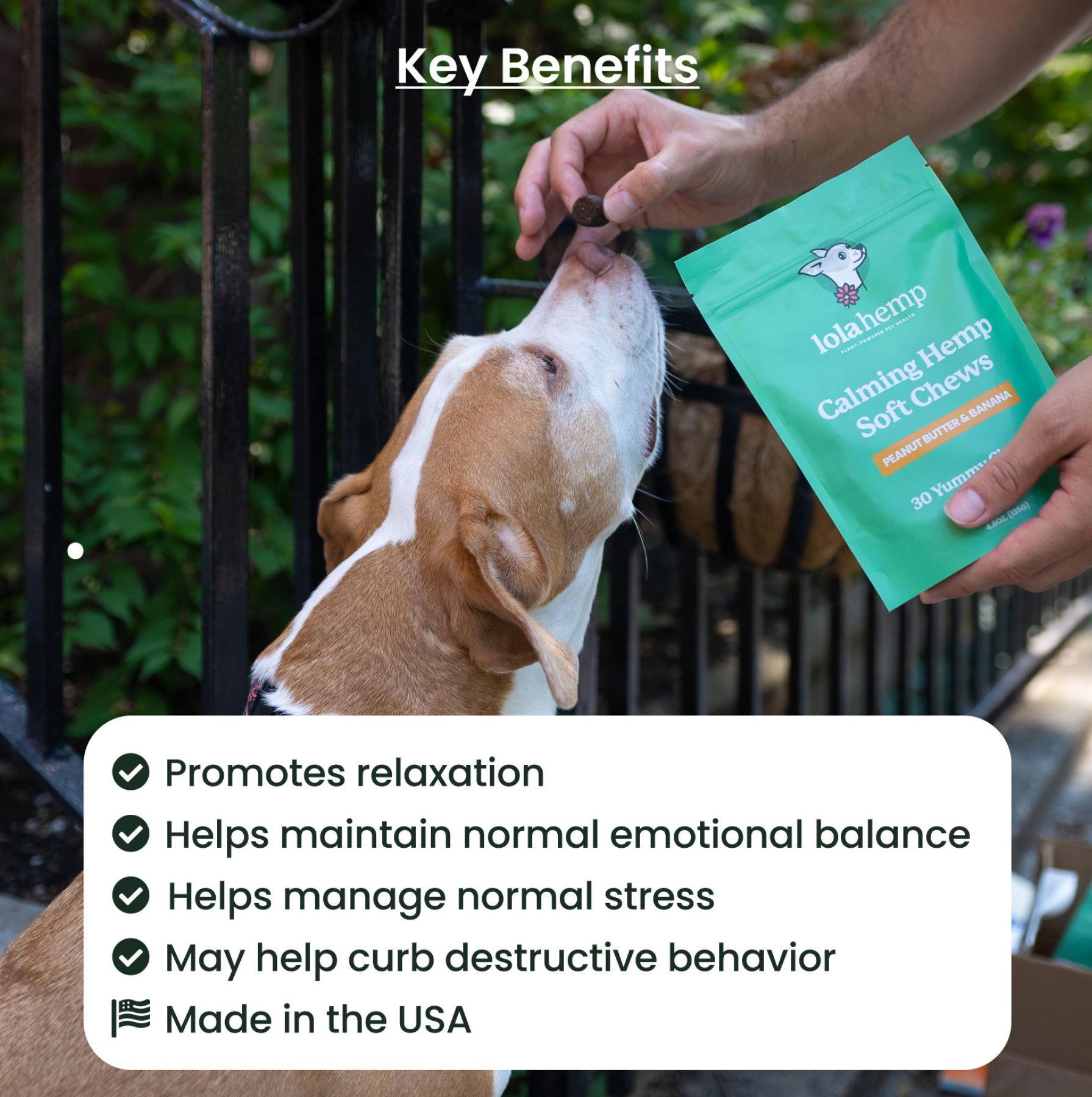
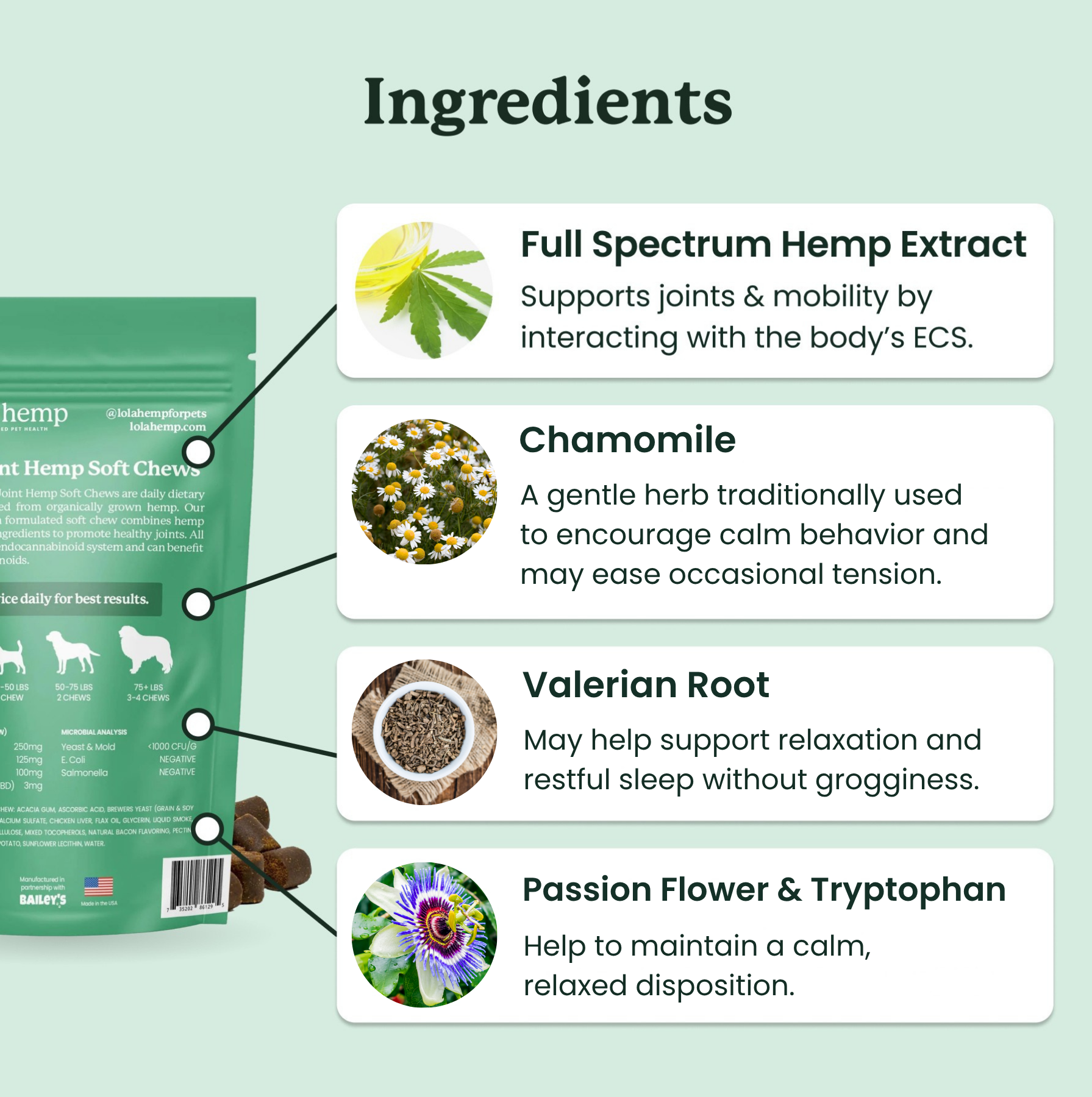
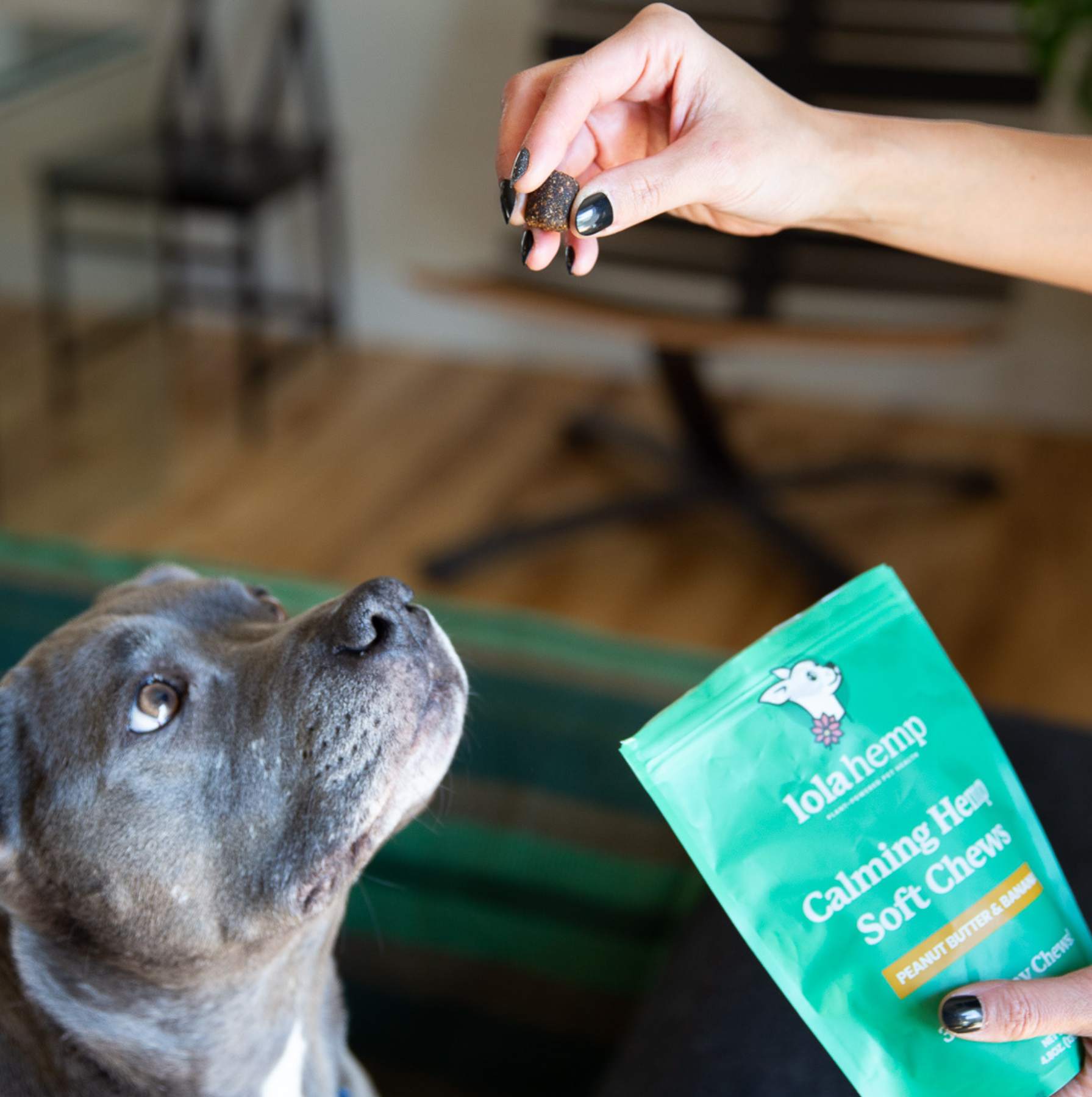
For dogs whose baseline anxiety is high enough that they can't engage with behavioral work — too activated to settle even briefly — some owners find that a calming supplement helps create a workable starting point. Lolahemp's calming supplements are formulated to help maintain calmness and support a normal, relaxed disposition in dogs, which may support the desensitization process by lowering the overall arousal level your dog is working from.
Supplements work alongside behavioral intervention, not instead of it. And for dogs with severe separation anxiety, always loop in your vet before starting anything new.
Frequently Asked Questions
Can separation anxiety in rescue dogs be cured? Many dogs with mild to moderate separation anxiety improve dramatically — to the point where it's no longer a significant issue — with consistent behavioral work. Severe cases may require ongoing management rather than a complete resolution, but most dogs can reach a functional baseline with the right approach.
How long does it take to treat separation anxiety in a rescue dog? It depends on severity. Mild cases can show meaningful improvement in a few weeks. Moderate to severe cases often take several months of consistent, structured work. Progress is almost always nonlinear — expect good days and setbacks.
Is separation anxiety worse in rescue dogs than other dogs? Rescue dogs are more commonly affected, likely because of abandonment history, shelter stress, and the intensity of early bonding. But separation anxiety exists in dogs from all backgrounds — it isn't exclusively a rescue dog issue.
My rescue dog follows me from room to room — is that separation anxiety? Velcro behavior and separation anxiety often coexist, but following you around the house doesn't necessarily mean your dog will panic when left alone. The defining question is what happens when you actually leave — mild clinginess at home with calm alone-time behavior is different from true separation anxiety.
Should I get another dog to help with separation anxiety? Sometimes a companion dog helps, sometimes it doesn't — and occasionally the anxious dog simply redirects their distress onto the new dog. It's generally not recommended as a primary intervention for separation anxiety, and shouldn't be the first thing you try.


