

Anxiety in dogs isn't just a puppy problem. Many dogs become more anxious as they get older, and the reasons are specific to aging — sensory decline, cognitive changes, physical discomfort, and a reduced ability to adapt to disruption. If your senior dog seems more on edge than they used to be, or has developed new anxious behaviors in their later years, there's usually an identifiable reason behind it.
Related product



Why Anxiety Often Increases With Age
Sensory loss. Dogs that are losing their hearing or vision experience the world as less predictable and more startling. A dog that can no longer hear someone approaching may be frightened by sudden appearances. One with reduced vision may become hesitant in low light or in unfamiliar spaces. Both scenarios increase baseline anxiety because the dog can no longer rely on the sensory information they used to use to feel safe.
Cognitive decline. Canine cognitive dysfunction (CCD) and anxiety are closely linked. As the brain changes with age, dogs can become more easily disoriented, more reactive to disruption in routine, and more distressed when separated from familiar people. The relationship goes in both directions — anxiety can worsen cognitive symptoms, and cognitive decline tends to worsen anxiety.
Physical discomfort. A dog that's uncomfortable is a dog that's on alert. Chronic discomfort from arthritis or other age-related conditions keeps the nervous system in a low-grade state of stress, which over time can contribute to generalized anxiety. This is one of the reasons supporting joint health proactively matters beyond just physical comfort — it affects your dog's mental state as well.
Changes in the household. Senior dogs often handle change less well than they did when younger. A new pet, a change in schedule, a move, or the loss of a companion animal can trigger significant anxiety in an older dog whose resilience and adaptability have diminished.

Common Forms of Anxiety in Senior Dogs
Separation anxiety can emerge or intensify in senior dogs, sometimes in dogs that handled alone time well for most of their lives. Signs include vocalization, destructive behavior, house soiling, and excessive distress when you prepare to leave.
Noise sensitivity often worsens with age. Thunderstorms, fireworks, or other loud events that a dog once took in stride can become genuinely distressing. Interestingly, this can happen even as a dog's hearing declines — certain frequencies remain audible while others are lost, and unpredictable partial sounds can be more anxiety-provoking than hearing them clearly.
Generalized anxiety shows up as persistent restlessness, panting without physical cause, excessive clinginess, reluctance to settle, or changes in appetite.
Nighttime anxiety is common and is covered in detail in our post on why older dogs are restless at night.
What Helps
Identify and address the underlying cause. A vet visit that includes a physical assessment, cognitive evaluation, and basic bloodwork helps rule out or identify medical contributors. Addressing physical discomfort, for instance, often reduces anxiety significantly — because chronic discomfort keeps the nervous system primed for stress.
Maintain routine. Consistent feeding times, walk schedules, and bedtime routines reduce the number of uncertain moments in a dog's day. When change is unavoidable, introducing it gradually and keeping as many other elements stable as possible helps your dog adjust.
Create a safe space. Many anxious dogs benefit from a defined retreat — a crate, a corner with their bed, or a specific room — where they know they won't be disturbed. For dogs with noise sensitivity, this space works best in an interior room away from windows, with some background noise to buffer sudden sounds.
Adapt for sensory loss. Approaching from the front, using hand signals alongside verbal cues, and keeping floor layouts consistent all reduce startling moments and increase your dog's sense of control over their environment.
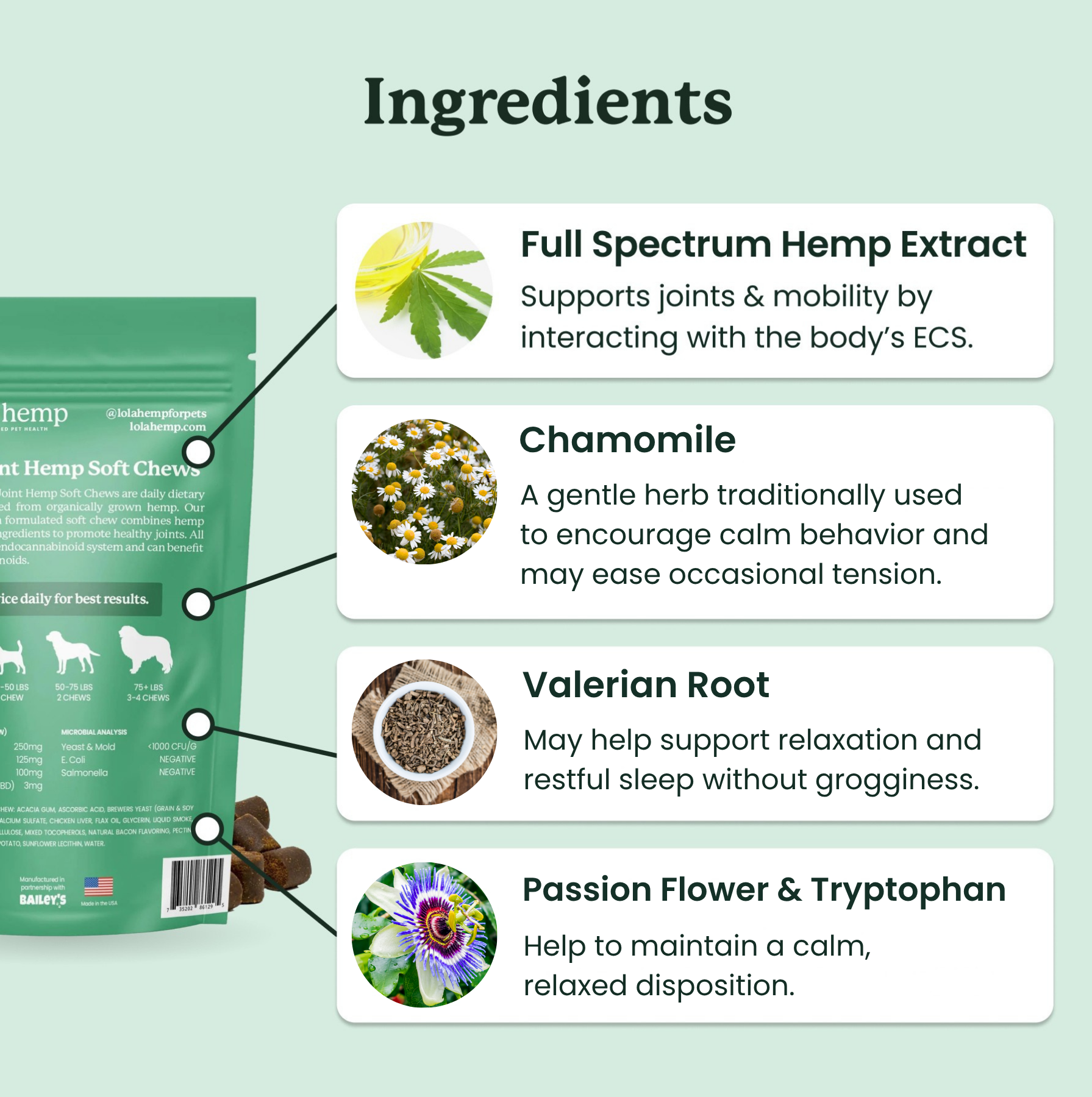
Supplements that may help support a normal, relaxed disposition. Several ingredients have been studied for their potential to help support balanced behavior and a normal emotional state in dogs. Melatonin may help support healthy sleep cycles. L-theanine has been studied for its calming properties. Hemp-derived CBD interacts with the endocannabinoid system, which plays a role in supporting normal body function, and has been an area of growing research interest for helping maintain everyday calm in dogs.
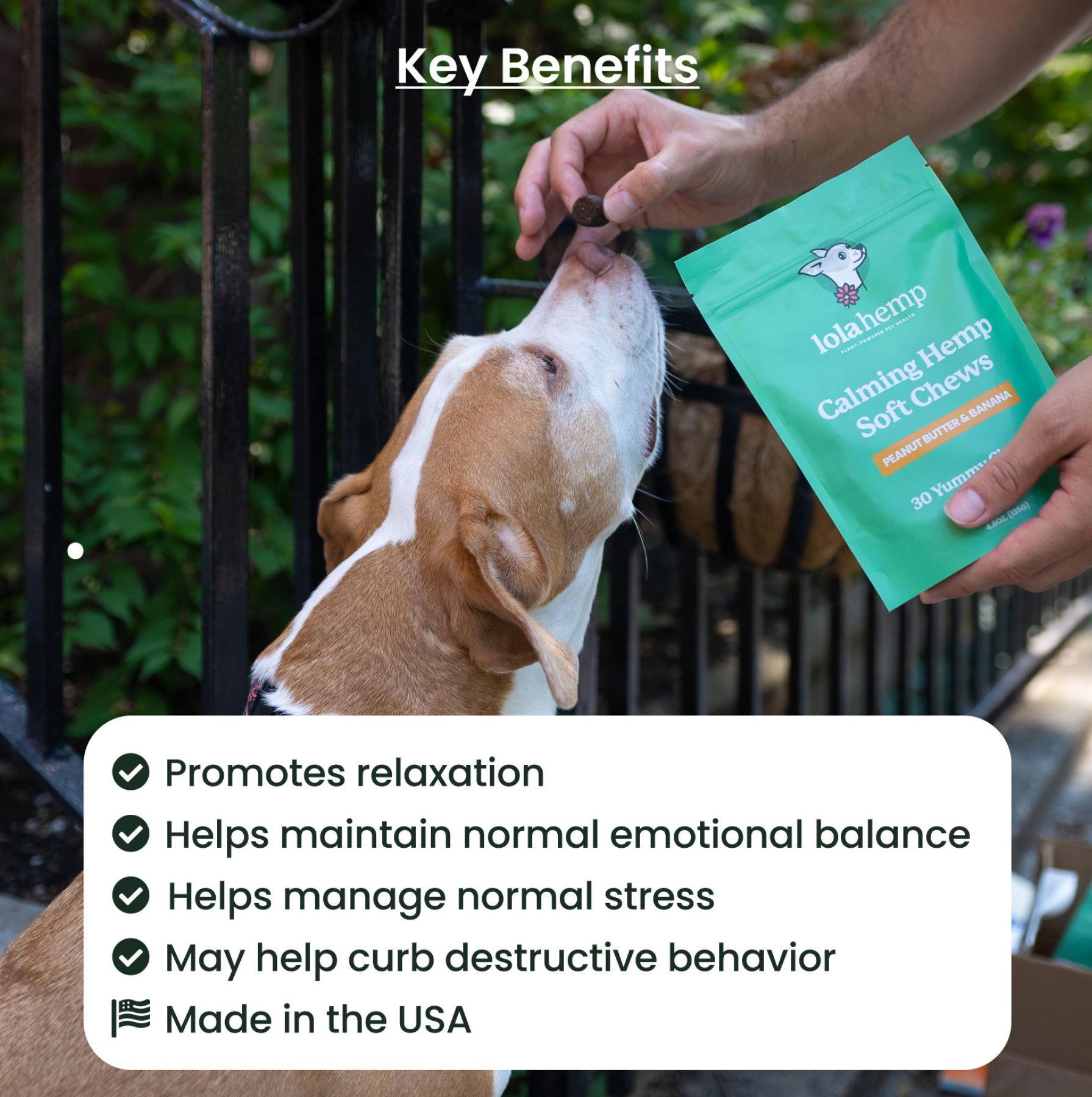
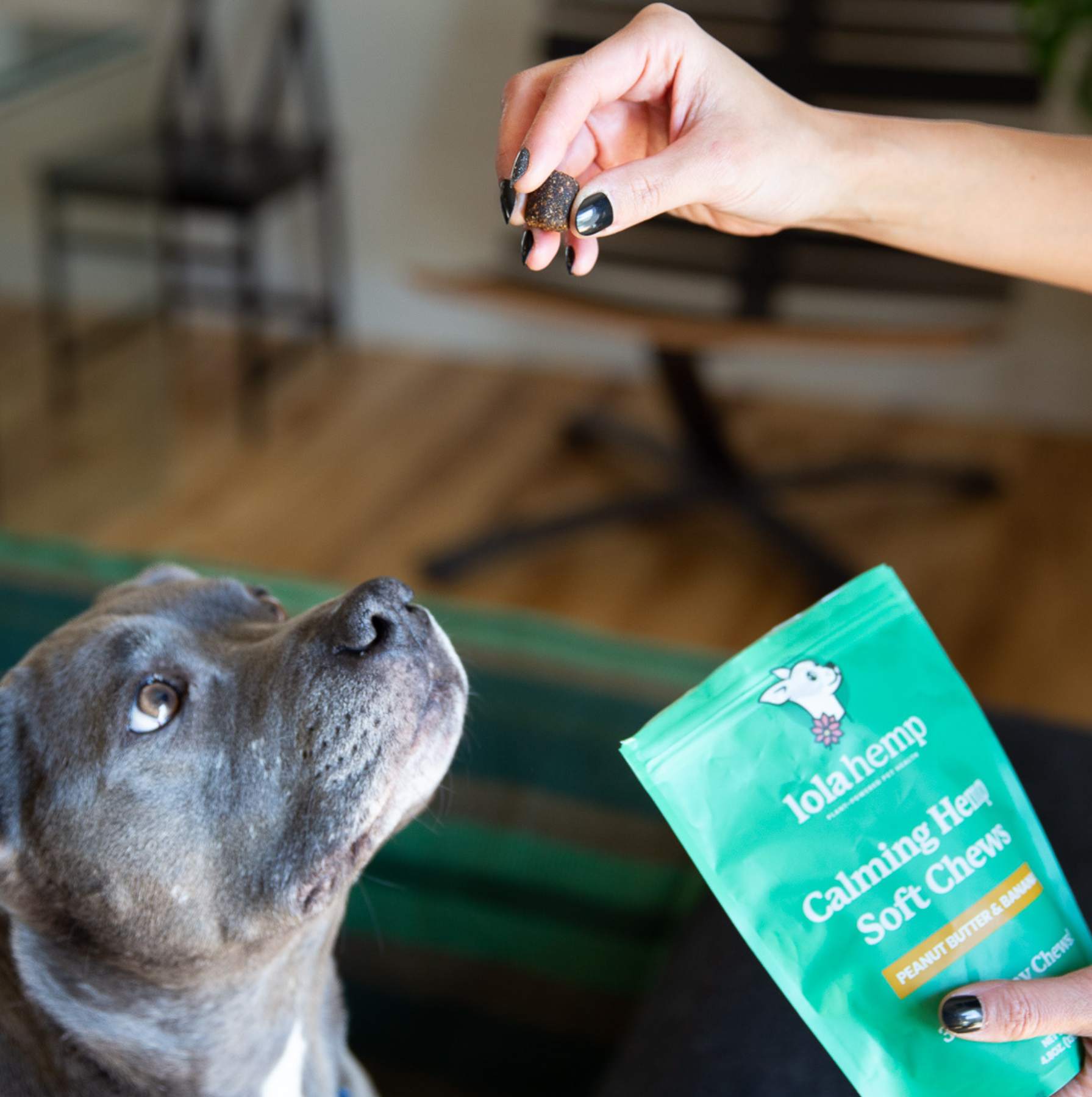
Lolahemp's calming supplements are formulated to help support a normal, relaxed disposition in dogs and may help maintain normal emotional balance — including the kind of low-grade, chronic anxiousness that's common in senior dogs. They work best as part of a broader approach that includes the environmental and behavioral strategies above.
Behavioral support. For dogs with significant separation anxiety or noise sensitivity, working with a veterinary behaviorist or certified applied animal behaviorist can be worthwhile. Desensitization protocols — gradual, structured exposure to anxiety triggers at low intensity — are among the most effective tools available and can make a real difference even in older dogs.
Medication. For severe anxiety that isn't responding to other approaches, prescription medications are available and appropriate in some cases. Options range from situational medications for events like fireworks to daily medications for generalized or separation anxiety. The goal is always to support your dog's wellbeing — medication isn't a last resort, it's a tool like any other.
Managing Anxiety Long-Term
Anxiety in senior dogs rarely resolves entirely, but it can be managed to a point where your dog's quality of life is genuinely good. The combination of addressing physical causes, maintaining routine, optimizing the environment, and using appropriate supplements or medication when needed gives most dogs a meaningfully calmer day-to-day experience.
For an overview of everything to expect as your dog ages, the complete guide to senior dog health is a useful reference. And for the specific intersection of anxiety and cognitive changes, our guide on dog dementia signs, stages, and how to help covers the cognitive dimension in more depth.
Frequently Asked Questions
Is it normal for dogs to get more anxious as they age?
Yes, and it's more common than many owners realize. Sensory decline, cognitive changes, and chronic physical discomfort all contribute to increased anxiety in senior dogs. It's not simply a personality shift — there are usually identifiable physical and neurological reasons behind it.
How do I know if my senior dog has anxiety or is just slowing down?
Slowing down looks like a dog that moves less, rests more, and is generally content. Anxiety looks like a dog that can't settle, pants without exertion, seeks constant reassurance, or shows distress in situations that didn't previously bother them. The key distinction is whether your dog seems comfortable in their reduced activity or unsettled by it.
Can anxiety in senior dogs be supported?
In most cases, yes — not eliminated entirely, but meaningfully reduced. A combination of addressing underlying physical causes, maintaining routine, environmental adjustments, supplements that may help support a normal emotional balance, and in some cases medication gives most senior dogs a noticeably calmer quality of life.
Can CBD help with anxiety in senior dogs?
CBD interacts with the endocannabinoid system, which plays a role in supporting normal body function. Early research and owner-reported experience suggest it may help support a calm, settled disposition in some dogs. It's not a replacement for addressing underlying causes, but it can be a useful part of a broader approach.
When should I see a vet about my senior dog's anxiety?
If anxiety is affecting your dog's quality of life — disrupting sleep, causing distress, or significantly changing their behavior — a vet visit is worth it. Anxiety can have medical causes that are treatable, and your vet can help you build a management plan appropriate for your dog's specific situation.


