

A senior dog that suddenly can't settle at night is one of the more exhausting situations for owners to deal with — and one of the more common ones. You're losing sleep, your dog seems distressed, and it's not obvious what's causing it or what to do. Before assuming it's just age, it's worth understanding what's actually driving the behavior. Most cases have an identifiable cause, and most causes have something that can be done about them.
Related product




Why Nighttime Restlessness Happens in Older Dogs
There are several distinct causes, and more than one can be present at the same time. Working through them systematically — ideally with your vet — is more useful than trying a single fix and hoping for the best.
Physical Discomfort
This is the first thing to rule out. A dog that can't find a comfortable position, gets up and lies down repeatedly, or seems to shift constantly through the night is often dealing with unmanaged joint discomfort. Arthritis is the most common culprit, particularly in the hips, spine, and joints, but dental disease, abdominal issues, or other conditions can produce the same pattern.
The challenge is that dogs are instinctively good at masking discomfort during the day when activity and distraction are present. At night, when the house is quiet and there's nothing else to focus on, discomfort becomes harder to ignore. If nighttime restlessness appeared gradually alongside other signs of aging — stiffness in the morning, reluctance to jump, slowing on walks — physical discomfort is the most likely primary driver.

Canine Cognitive Dysfunction
Sleep-wake cycle disruption is one of the hallmark signs of canine cognitive dysfunction (CCD). Dogs with CCD often sleep more during the day and become restless, confused, or vocal at night — a pattern called sundowning, which mirrors a similar phenomenon in human dementia. A dog that wanders aimlessly, stares at nothing, or seems disoriented in familiar spaces at night is showing signs that go beyond simple insomnia.
If the restlessness is accompanied by other cognitive signs — house soiling, changes in how they interact with you, confusion in familiar spaces — our post on dog dementia signs, stages, and how to help covers this in more detail.
Anxiety
Anxiety in senior dogs can emerge or worsen with age, sometimes independently of cognitive decline and sometimes alongside it. A dog that was always somewhat anxious may become more so as their sensory abilities diminish — hearing loss and vision loss both make the world less predictable, which increases baseline anxiety. Nighttime, when the environment is darker and quieter, can feel less safe to a dog already on edge.
Medical Conditions Affecting Sleep
Several medical conditions can disrupt sleep in older dogs and are worth ruling out with bloodwork and a physical exam: Cushing's disease causes increased thirst and urination that disrupts sleep; kidney disease increases urination frequency; urinary tract infections cause urgency and discomfort that are hard to sleep through. These are some of the more easily addressed causes and worth checking early in the process.
Sensory Decline
A dog losing their hearing or vision may become more easily startled at night — by sounds they can't quite place or by shapes in low light they can't identify. What looks like restlessness may actually be vigilance. Nightlights and keeping the sleeping environment consistent and familiar can help in these cases.
What to Do About Nighttime Restlessness
See your vet before trying anything else. A vet visit that includes bloodwork and a physical assessment gives you a baseline to work from and rules out medical causes that need direct treatment.
Address physical discomfort if it's present. Managing joint discomfort appropriately — through your vet's recommended approach, environmental modifications, and joint support supplements — often resolves the sleep disruption as a downstream benefit.
Establish and protect a nighttime routine. A predictable sequence of events leading up to sleep — a short walk, a quiet period, then bed — signals that it's time to settle. Keeping this routine the same each night reduces the disorientation that comes with unpredictability.
Optimize the sleep environment. An orthopedic bed positioned away from drafts, in a familiar and relatively contained space, gives a restless dog the best physical conditions for sleep. Nightlights reduce disorientation for dogs with vision changes or cognitive dysfunction.
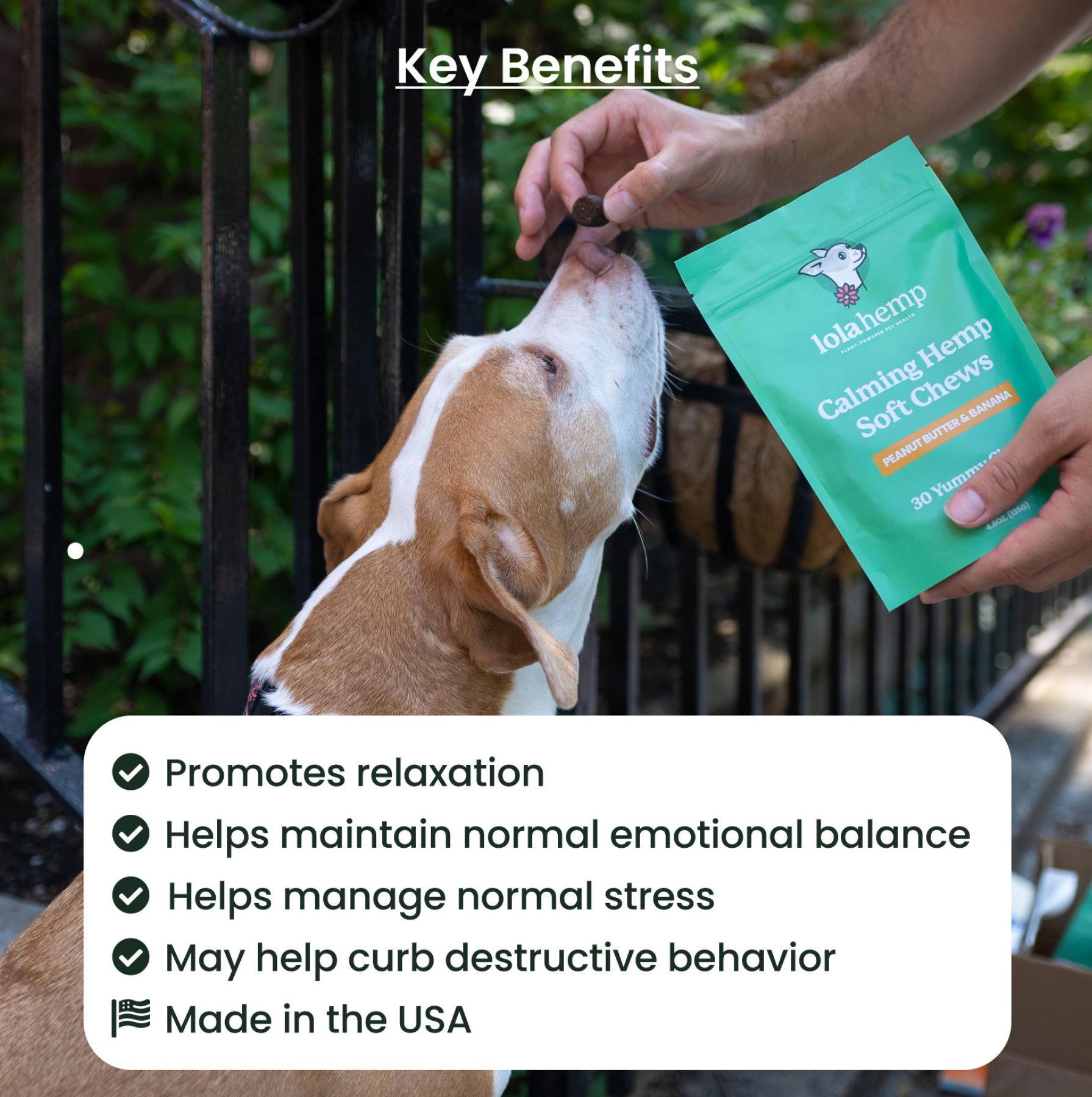
Consider supplements that may help support a normal, relaxed state. For dogs whose restlessness has an anxiety component, certain supplements may help support a calm, settled disposition at night. Ingredients like melatonin, L-theanine, and hemp-derived CBD have all been studied in this context. Lolahemp's calming supplements are formulated to help maintain calmness and support a normal, relaxed disposition in dogs — and may be worth considering as part of a broader approach alongside the environmental and veterinary steps above.
Don't reinforce the behavior inadvertently. If your dog is safe and their needs are met, allowing them to settle without immediate intervention — while making sure their environment is as comfortable as possible — is usually the better long-term approach.
When It Becomes a Quality of Life Question
Chronic sleep disruption is hard on dogs and hard on owners. If you've worked through the causes above, addressed what's treatable, and your dog is still consistently distressed at night, that picture is worth discussing honestly with your vet. Persistent nighttime distress — especially alongside other signs of significant cognitive or physical decline — is one of the factors that informs quality of life assessments for senior dogs.
For a broader look at anxiety in aging dogs and what drives it, see our post on senior dog anxiety. And for an overview of the full range of changes that come with aging, the complete guide to senior dog health is a good reference point.
Frequently Asked Questions
Why is my old dog suddenly restless at night?
The most common causes are physical discomfort (particularly joint stiffness), canine cognitive dysfunction, anxiety, or a medical condition like kidney disease or Cushing's disease that increases nighttime thirst and urination. A vet visit that includes bloodwork is the most efficient way to identify what's driving it.
Is nighttime restlessness a sign of dementia in dogs?
It can be. Sleep-wake cycle disruption is one of the hallmark signs of canine cognitive dysfunction — dogs with CCD often sleep through the day and become restless at night. If the nighttime restlessness is accompanied by other signs like disorientation, changes in interaction, or house soiling, CCD is worth discussing with your vet.
What can I give my dog to help them sleep at night?
Environmental changes are the first step — orthopedic bedding, a consistent bedtime routine, and nightlights for dogs with vision changes or cognitive dysfunction. For dogs with an anxiety component, supplements formulated to help maintain calmness and support a normal, relaxed disposition may also help. Always consult your vet before starting any new supplement.
Can pain cause nighttime restlessness in dogs?
Yes — physical discomfort is one of the most common causes of nighttime restlessness in senior dogs. Dogs mask discomfort more effectively during the day when activity and distraction are present; at night, when the house is quiet, discomfort becomes harder to ignore and often manifests as an inability to settle.
How do I know if my dog's nighttime restlessness is serious?
Any nighttime restlessness that's significantly affecting your dog's sleep and wellbeing is worth a vet visit — regardless of whether it seems serious. If it's accompanied by other concerning signs like weight loss, increased thirst, house soiling, or cognitive changes, prompt evaluation is the right call.


