The phrase "entourage effect" gets used frequently in conversations about CBD — often as a shorthand that signals something important without explaining what that something actually is. For dog owners evaluating products, or trying to understand why a product they've already used didn't deliver results, the concept matters beyond the label. Understanding the entourage effect means understanding why two products with identical CBD milligrams on the front of the bottle can behave very differently inside a dog's body.
This article explains what the entourage effect is, what the research behind it actually says, and why it has direct practical implications for how you evaluate CBD products for your dog. It connects to a broader series on why CBD often fails to deliver results — and the framework for approaching it more systematically.
Related product



What the Entourage Effect Is
The entourage effect is the term used to describe the synergistic interaction between the naturally occurring compounds in cannabis and hemp — including cannabinoids, terpenes, and flavonoids — and how those interactions produce effects that differ from, and in many cases exceed, what any single compound produces in isolation.
The concept was introduced by Israeli researchers Shimon Ben-Shabat and Raphael Mechoulam in 1998, who observed that the body's own endocannabinoid compounds (endocannabinoids) produced different effects in the presence of related inactive compounds than they did alone. The term was later developed more fully by neurologist and pharmacologist Ethan Russo in a widely cited 2011 review published in the British Journal of Pharmacology, which examined the case for phytocannabinoid-terpenoid synergy and its clinical potential.
The core implication is this: the whole is more than the sum of its parts. A full spectrum hemp extract, because it preserves the plant's full compound profile, interacts with the body differently than an extract reduced to CBD alone. And the direction of that difference consistently favors whole-plant formats in the research that exists.
The Endocannabinoid System in Dogs
To understand why the entourage effect matters for dogs specifically, it helps to understand the biological system it operates through.
Dogs have an endocannabinoid system (ECS) — a regulatory network present in all mammals that includes two primary receptor types, endogenous cannabinoids produced by the body, and enzymes that synthesize and break them down. CB1 receptors are concentrated in the central nervous system and brain, and are involved in functions including mood, memory, appetite, and pain signaling. CB2 receptors are distributed more broadly, particularly in immune tissues and the peripheral nervous system.
CBD does not bind directly to CB1 or CB2 receptors in the way THC does. Instead, it works indirectly — modulating receptor activity, inhibiting the breakdown of the body's own endocannabinoids, and interacting with several non-cannabinoid receptor pathways including serotonin receptors and TRPV1 (a channel involved in temperature and pain signaling). Minor cannabinoids in a full spectrum extract interact with the ECS through their own distinct mechanisms, adding layers of activity that isolate cannot provide. Terpenes add another layer still.
What the Research Actually Says
It's important to be honest about where the evidence stands. The entourage effect is well-supported conceptually and in preclinical research, but large-scale controlled clinical trials — particularly in dogs — are limited. Most of the foundational research comes from rodent models, cell cultures, and observational work. That context matters. It doesn't invalidate the hypothesis; it contextualizes it appropriately for a reader trying to make an informed decision.
Gallily, Yekhtin, and Hanus (2015)
The most frequently cited direct comparison of isolate versus whole-plant extract was published in Pharmacology & Pharmacy in 2015. Researchers compared CBD isolate against a whole-plant CBD-rich cannabis extract in a mouse inflammatory model. The isolate produced a bell-shaped dose-response curve — effective within a narrow dose window, then declining in effectiveness as doses increased beyond that point. The whole-plant extract produced a more linear dose-response: more predictable, effective across a wider dose range, and without the ceiling and drop-off that characterizes the isolate curve.
The researchers concluded that the whole-plant extract overcame the dose-response limitations of CBD isolate, and attributed this directly to the presence of multiple synergistic compounds — the entourage effect in practical demonstration. The title of the paper — "Overcoming the Bell‐Shaped Dose‐Response of Cannabidiol by Using Cannabis Extract Enriched in Cannabidiol" — states the finding plainly.
Russo's 2011 Review
Ethan Russo's review in the British Journal of Pharmacology examined phytocannabinoid-terpenoid synergy and proposed specific mechanisms by which terpenes could modulate cannabinoid receptor activity, influence neurotransmitter systems, and contribute to a compound effect profile that neither cannabinoids nor terpenes could produce alone. Russo reviewed terpenes including linalool, beta-caryophyllene, myrcene, and others — identifying documented pharmacological activity and proposed mechanisms of interaction with the endocannabinoid system.
This review is not a clinical trial. It's a well-constructed theoretical and mechanistic argument supported by existing pharmacological data. It has been cited over 2,000 times in the scientific literature, which reflects its influence on how researchers and clinicians think about whole-plant hemp and cannabis formulations.
How Each Compound Class Contributes
Minor Cannabinoids
CBG (cannabigerol) is often called the "precursor" cannabinoid because most other cannabinoids in the plant derive from it enzymatically. Research has found that CBG interacts with both CB1 and CB2 receptors, as well as with alpha-2 adrenoceptors involved in the nervous system's stress response. CBN (cannabinol) is a mildly psychoactive cannabinoid found in small amounts in hemp and has been studied for its interaction with CB2 receptors. CBC (cannabichromene) does not bind significantly to CB1 receptors but has shown activity at TRPV1 and TRPA1 channels — the same channels that CBD also modulates. Each of these compounds adds distinct receptor interactions that isolate cannot replicate.
Terpenes
Beta-caryophyllene is the most pharmacologically active terpene in the context of the endocannabinoid system. Unlike most terpenes, it binds directly to CB2 receptors, which is why some researchers classify it as a dietary cannabinoid. It's found in hemp, black pepper, cloves, and hops. Its CB2 activity means its presence in a full spectrum extract is not merely aromatic — it contributes direct receptor-level activity.
Myrcene is among the most abundant terpenes in many hemp cultivars. Research has suggested myrcene may influence the permeability of cell membranes, potentially affecting how efficiently cannabinoids cross the blood-brain barrier. It's also found in hops and lemongrass and has been studied for its interaction with several pharmacological targets.
Linalool is the primary aromatic compound in lavender and is present in many hemp strains. Studies have examined its interaction with the GABA-A receptor system — the same receptor family involved in inhibitory neurotransmission — which overlaps with pathways that CBD also modulates. This suggests a possible synergistic mechanism between linalool and CBD at the receptor level.
Limonene is a citrus-associated terpene found in varying concentrations in hemp. It has been studied for interactions with serotonin receptors, again overlapping with one of CBD's proposed mechanisms of action.
None of these terpenes are present in CBD isolate. They are removed entirely during the purification process.
Flavonoids
Hemp contains flavonoids including cannaflavin A and cannaflavin B, which are unique to the cannabis genus. Early research into cannaflavins has found pharmacological activity, though the literature on their specific role in the entourage effect is more limited than for cannabinoids and terpenes. Their presence in full spectrum extracts is part of the complete compound profile that distinguishes whole-plant hemp from isolate — even if their individual contributions are still being characterized.
Why This Changes How You Should Evaluate Products
The practical implication of the entourage effect is that milligrams of CBD alone are an incomplete basis for evaluating a product. A 300mg full spectrum oil and a 300mg isolate oil are not equivalent, even though the CBD content is identical. The full spectrum product contains dozens of additional compounds that alter how that CBD interacts with the endocannabinoid system — broadening the dose-response window, engaging additional receptor pathways, and producing a different overall effect profile.
This is also why format identification is a prerequisite to meaningful troubleshooting. If a dog owner increased their isolate dose trying to get better results, the bell-curve problem means that increase may have moved the dose further outside the effective range rather than deeper into it. Switching to a full spectrum product at a lower milligram count could produce better results — not because of higher potency, but because of a more favorable formulation.
Verifying format through a certificate of analysis is the most reliable method. A full spectrum COA will show CBD alongside measurable minor cannabinoids. Understanding how to interpret that COA makes format verification straightforward and removes the guesswork from product selection.
A Note on the Limits of the Evidence
Presenting the entourage effect honestly means acknowledging what the research doesn't yet confirm. The Gallily study and Russo's review are influential and frequently cited, but neither is a large-scale randomized controlled trial in dogs. The entourage effect is a well-reasoned hypothesis supported by mechanistic evidence and preclinical findings — not a settled clinical conclusion with the same evidentiary weight as a pharmaceutical trial. Researchers including Russo have noted publicly that more rigorous clinical work is needed to fully characterize the synergistic dynamics between hemp plant compounds.
That said, the existing evidence is consistent in direction: whole-plant extracts outperform isolate in preclinical models, the mechanistic basis for synergy between hemp compounds is biologically plausible and supported by pharmacological research, and the practical experience of veterinarians who work with hemp products tends to align with the full spectrum preference. For a dog owner making a product decision, that convergence of evidence is meaningful — even while acknowledging that the science is still developing.
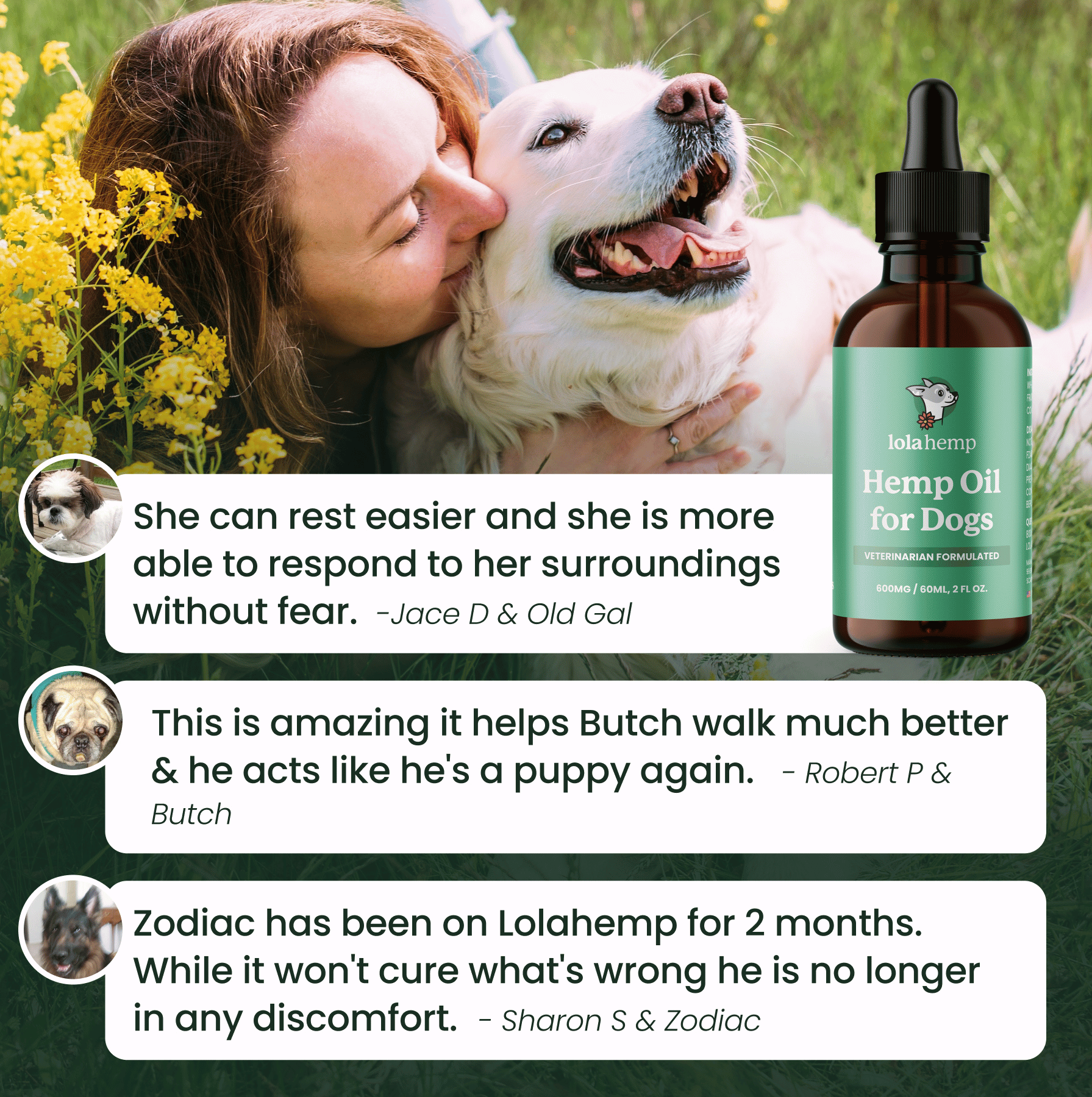
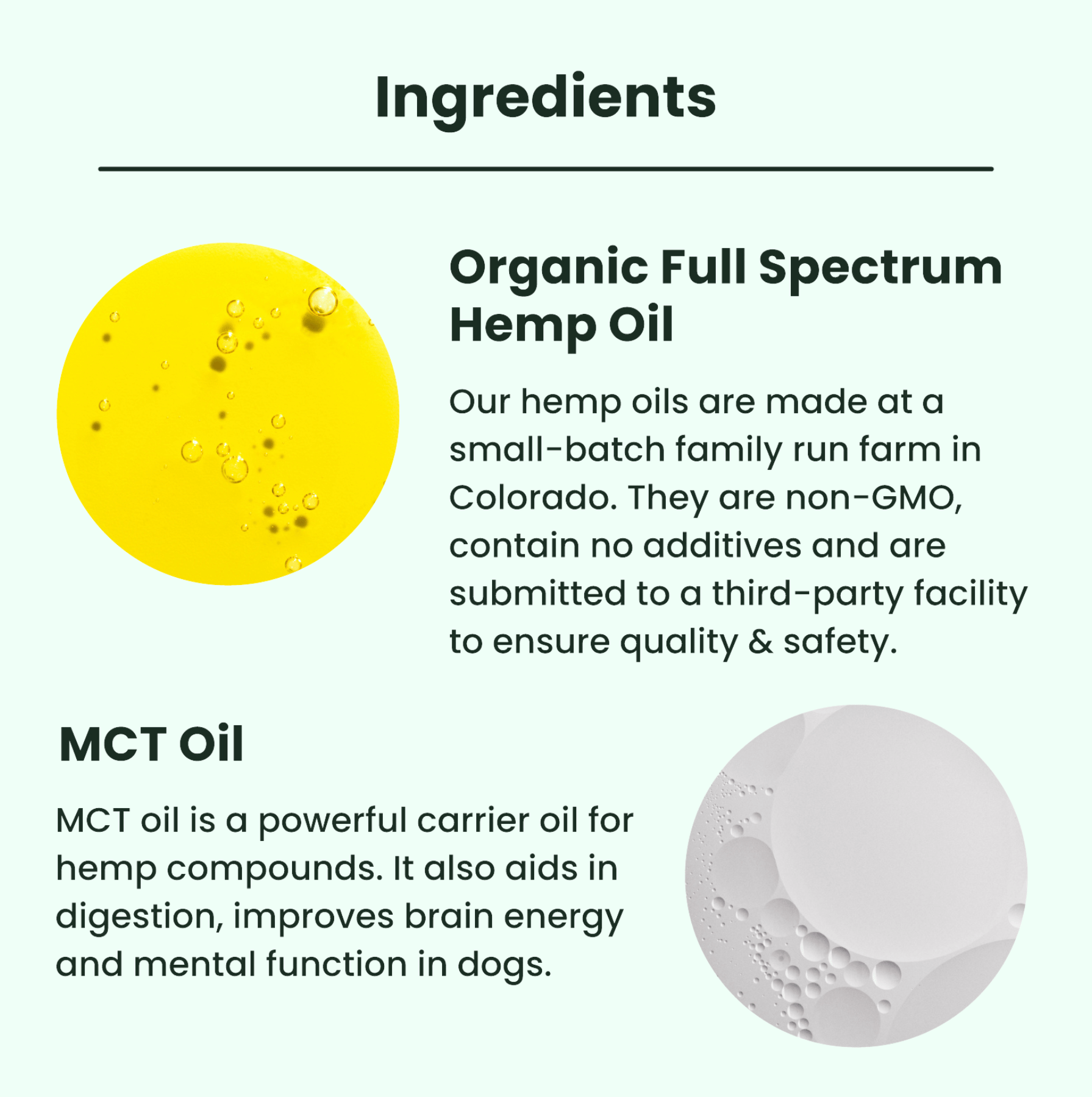
Lolahemp's hemp oil is a full spectrum product, preserving the naturally occurring cannabinoids, terpenes, and plant compounds from hemp rather than reducing the extract to a single molecule. CBD interacts with the endocannabinoid system, which plays a role in supporting normal body function. For dogs experiencing everyday environmental stressors, Lolahemp's calming supplements are designed to help dogs maintain a settled, relaxed state and may help support normal emotional balance.
Frequently Asked Questions
What is the entourage effect in cannabis and hemp?
The entourage effect is the term for the synergistic interaction between naturally occurring compounds in cannabis and hemp — including cannabinoids, terpenes, and flavonoids — and how those interactions produce effects that differ from what any single compound produces in isolation. First described by Mechoulam and Ben-Shabat in 1998 and expanded by Ethan Russo in 2011, it explains why whole-plant extracts behave differently than CBD isolate despite similar CBD concentrations.
Does the entourage effect apply to dogs?
Dogs have an endocannabinoid system structurally similar to that of other mammals, including the same CB1 and CB2 receptors and regulatory mechanisms that the entourage compounds interact with. While large-scale controlled clinical trials in dogs are limited, the biological framework is consistent across mammalian species. Many integrative veterinarians who work with hemp products favor full spectrum formulations for dogs based on the same evidence that supports this preference in other contexts.
What compounds in full spectrum hemp contribute to the entourage effect?
Multiple compound classes contribute. Minor cannabinoids — including CBG, CBN, and CBC — each interact with the endocannabinoid system through their own distinct receptor pathways. Terpenes including beta-caryophyllene (which binds directly to CB2 receptors), myrcene, linalool, and limonene have documented pharmacological activity and interact with many of the same receptor systems that cannabinoids modulate. Flavonoids including hemp-specific cannaflavins are also part of the full-plant profile, though their individual contributions to the entourage effect are less fully characterized in the current literature.
Why does CBD isolate not produce the entourage effect?
CBD isolate is purified cannabidiol with all other plant compounds removed during extraction. Without minor cannabinoids, terpenes, and flavonoids, there is no synergistic interaction — only CBD's own mechanisms of action operating in isolation. The 2015 Gallily study demonstrated this practically: isolate produced a bell-shaped dose-response with a narrow effective range, while a whole-plant extract produced a more linear and predictable response across a wider dose range — a difference the researchers attributed to the presence of entourage compounds.
How does the endocannabinoid system relate to the entourage effect in dogs?
The endocannabinoid system is the biological network the entourage effect operates through. It includes CB1 and CB2 receptors, endogenous cannabinoids produced by the body, and regulatory enzymes. Full spectrum hemp compounds interact with this system through multiple pathways simultaneously: CBD works indirectly through several receptor mechanisms; minor cannabinoids interact more directly with CB1 and CB2; terpenes like beta-caryophyllene bind directly to CB2 receptors; and compounds like linalool interact with GABA-A receptors that overlap with CBD's pathways. The result is a broader, multi-pathway engagement with the endocannabinoid system than isolate can produce.