

A certificate of analysis — commonly called a COA — is the most important document you can review before buying a CBD product for your dog. It's also one of the most misunderstood. Many pet owners have either never seen one or have looked at one without knowing what they were actually reading. For a category of products where label claims are inconsistent and quality varies widely, the COA is the closest thing to a ground truth available.
This guide walks through what a COA contains, what each section tells you, and how to use it to distinguish a well-made product from one that shouldn't be trusted. If you're working through why CBD hasn't been producing results for your dog, the COA is often where the clearest answers begin.
- What a Certificate of Analysis Is — and Why "Third-Party" Matters
- The Cannabinoid Panel
- The Heavy Metals Panel
- The Pesticide Panel
- The Microbial Contamination Panel
- Residual Solvents
- Matching Batch Numbers
- Evaluating the Lab Itself
- A COA Review Checklist
- What a COA Won't Tell You
- Frequently Asked Questions
Related product



What a Certificate of Analysis Is — and Why "Third-Party" Matters
A certificate of analysis is a document issued by an accredited testing laboratory reporting the results of analysis conducted on a specific product batch. For pet CBD, a COA confirms which compounds are present, at what concentrations, and whether contaminants were detected.
The most critical qualifier here is third-party. A meaningful COA is issued by a laboratory with no financial relationship to the brand selling the product. In-house testing — where a company tests its own products — doesn't carry independent verification. The results may be accurate, but there's no external check confirming that. Any reputable pet CBD company should have third-party lab results available for every product batch, and those results should be accessible without requiring you to ask for them.
If a brand doesn't publish COAs, doesn't link to them on product pages, or provides only a summary rather than the full document, treat that as a meaningful gap in transparency — regardless of what the label says.
The Cannabinoid Panel
The cannabinoid panel is the most central section of any pet CBD COA. It lists the cannabinoids detected in the sample and their measured concentrations, typically expressed as a percentage or in milligrams per gram or milliliter.
Checking CBD Content Against the Label
Start with CBD itself. The measured concentration should align reasonably with what the label claims. Some variance is normal in botanical products — a product labeled as 500mg per bottle won't always land at exactly 500mg. But a significant discrepancy — say, 30% or more below label claim — indicates either a labeling problem or inconsistent production. Both matter.
Confirming the Format: Full Spectrum vs. Isolate
This is where the cannabinoid panel is most useful for format verification. If the product is labeled as full spectrum, you should see CBD as the dominant cannabinoid alongside measurable levels of minor cannabinoids — typically CBG, CBC, CBN, and sometimes others in smaller amounts. Their presence, even at low concentrations, confirms that the extract retained the full range of hemp compounds rather than being processed down to a single molecule.
If you see CBD at 99%+ purity with all other cannabinoids listed as "ND" (not detected), the product is an isolate — regardless of how it's marketed. Some products use language like "hemp extract," "hemp-derived CBD," or "phytocannabinoid-rich oil" without specifying format. The cannabinoid panel is the definitive check. Understanding the practical difference between these formats — and why it matters for dose-response — is covered in depth in the article on why isolate-based products often underperform compared to full spectrum hemp.
THC Content
THC is listed separately on most COAs. For a compliant hemp-derived product, THC should appear at or below 0.3% — the federal threshold for hemp classification. If a product marketed as full spectrum shows no detectable THC at all, it may have been processed to remove it, which would make it a broad spectrum product rather than a true full spectrum. That's not necessarily a problem, but it's worth knowing, because THC removal may also affect some of the synergistic compound interactions that make full spectrum extracts distinct.
The Heavy Metals Panel
Hemp is a bioaccumulator — it absorbs compounds from the soil it grows in, including heavy metals such as lead, arsenic, cadmium, and mercury. This agricultural property makes hemp useful for phytoremediation of contaminated land. It also means that hemp grown in poor-quality soil can concentrate metals into its extract.
A properly tested pet CBD product will include a heavy metals panel showing results for at minimum those four metals, with all values either listed as "ND" (not detected) or confirmed below established safety thresholds. Look for results in micrograms per gram (mcg/g) or parts per million (ppm) compared against recognized limits. If a COA doesn't include a heavy metals panel at all, it's incomplete — and that gap matters for a product intended for daily use.
The Pesticide Panel
Hemp grown with synthetic pesticides can carry residues into the extract. A pesticide panel tests for a range of compounds — typically dozens — and should show all results below detection limits or within acceptable regulatory ranges.
Some COAs include comprehensive pesticide panels covering 50 or more compounds; others test only a subset. The more complete the panel, the better. Organic hemp cultivation reduces the likelihood of synthetic pesticide use at the source, and some brands pursue USDA organic certification for their hemp specifically to address this concern. If pesticide testing is absent from a COA entirely, that's a gap worth noting before committing to a product for long-term use.
The Microbial Contamination Panel
Microbial testing checks for harmful bacteria — including E. coli and Salmonella — as well as yeast and mold. These contaminants can enter products through the raw plant material, the processing environment, or packaging conditions. Pathogenic organisms should show as "absent" or "not detected."
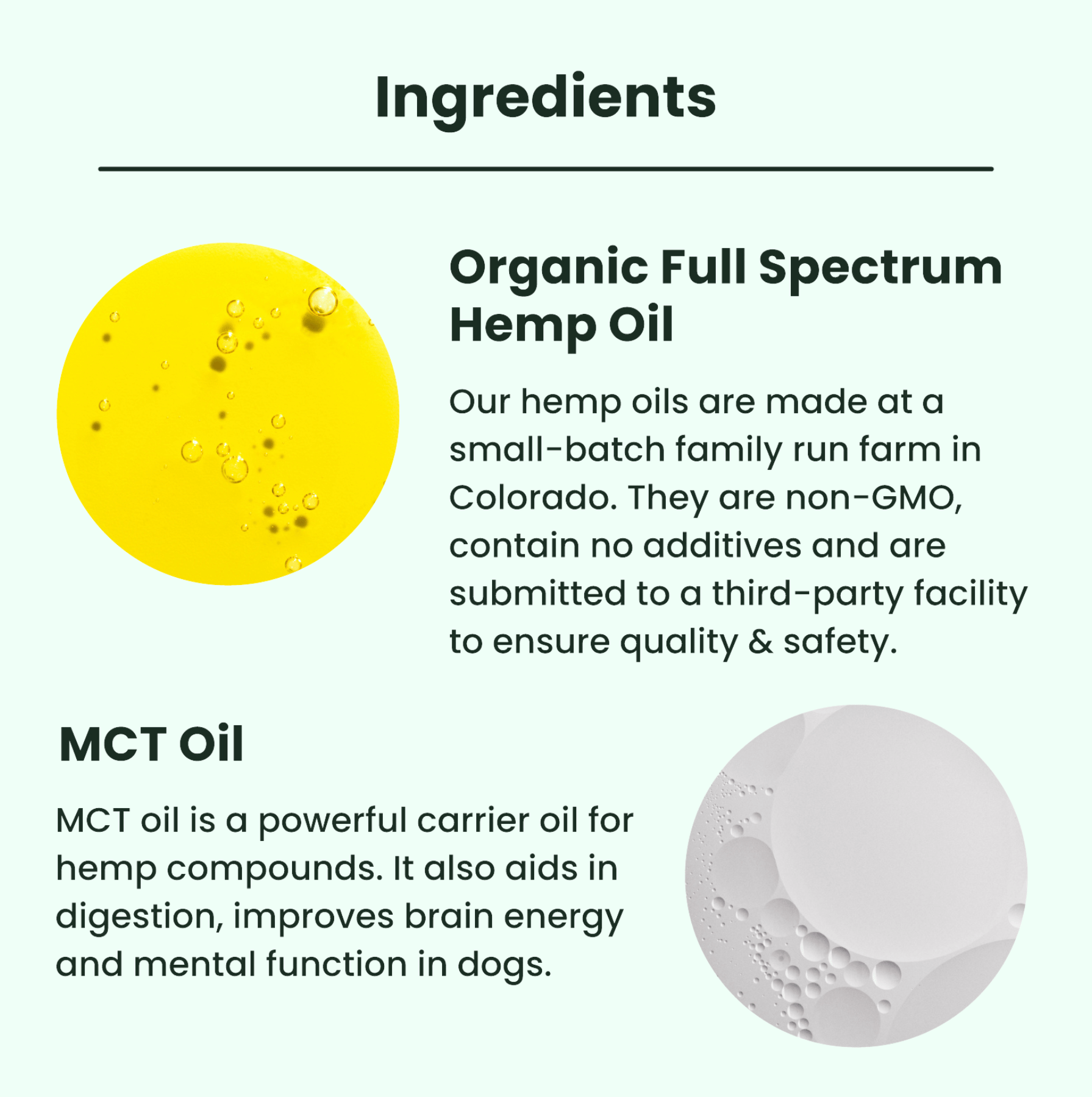
This panel is sometimes overlooked because it feels less relevant than cannabinoid content, but it's a meaningful indicator of overall production quality. Products with organic carrier oils like MCT oil or hemp seed oil are particularly worth checking here, as those oils can support microbial growth if handling standards aren't maintained throughout production.
Residual Solvents
CBD is extracted from hemp using various methods — CO2 extraction is common, but ethanol and hydrocarbon-based methods are also used in the industry. Some extraction processes involve solvents that must be fully purged from the final product. A residual solvents panel confirms that any solvents used during extraction have been removed to below accepted safety limits.
CO2 extraction avoids the residual solvents concern by design. Ethanol extraction, when performed correctly with proper purging steps, can also produce clean results. The panel should show all tested solvents at or below the limits set by relevant standards, or listed as not detected.
Matching Batch Numbers
Every product batch should carry a unique lot or batch number, and the COA you're reviewing should reference that specific batch. When a product arrives, check that the batch number on the label or packaging matches the batch number on the COA. A COA from a different batch doesn't confirm the quality of the specific product in your hands — it only confirms quality for the batch it was generated from.
Some brands publish COAs organized by batch number on their website. Others include a QR code on the product packaging that links directly to the batch-specific COA. Either approach works. What matters is that the documentation corresponds to your specific product, not just to the product line in general.
Evaluating the Lab Itself
Not all testing labs are equivalent. Look for laboratories that hold ISO 17025 accreditation, the international standard for testing and calibration laboratories. This accreditation indicates the lab operates under rigorously validated quality management systems. Recognizable cannabis testing laboratories with relevant accreditation include ProVerde Laboratories, Botanacor, and others.
If a COA doesn't clearly identify the testing laboratory or lists a lab that can't be verified through an independent search, that's a reason to pause. The lab name and accreditation status are as important as the test results themselves.
A COA Review Checklist
- Third-party lab? Verify the lab is independent from the brand.
- CBD content matches label? Look for significant discrepancies.
- Minor cannabinoids present? Confirms full spectrum if marketed as such.
- THC at or below 0.3%? Confirms hemp compliance.
- Heavy metals panel included and within limits? At minimum: lead, arsenic, cadmium, mercury.
- Pesticide panel included? Comprehensive panels preferred; all results within limits.
- Microbials tested? Pathogens should be absent or not detected.
- Residual solvents panel present? All values at or below safety limits.
- Batch number matches your product? Cross-reference before assuming the COA is relevant.
- Lab is ISO 17025 accredited? Verifiable through independent search.
What a COA Won't Tell You
A COA is a snapshot of a single batch tested at a specific point in time. It tells you what was in that extract when it was analyzed — not how the product was stored afterward, how stable the formulation is over time, or how a specific dog will respond. It's a quality gate, not a guarantee of efficacy. But it's a necessary quality gate. For a product category where regulatory oversight is still developing, third-party lab documentation is the primary mechanism consumers have for verifying that what's on the label is actually in the bottle.
Lolahemp makes third-party COAs available for its hemp oil products, and results can be cross-referenced by batch. For dogs whose owners are focused on supporting a calm, settled daily routine, Lolahemp's calming supplements are formulated to help maintain calmness and support a normal, relaxed disposition in dogs.
Frequently Asked Questions
What is a certificate of analysis (COA) for pet CBD?
A certificate of analysis is a document issued by an independent, accredited laboratory reporting the results of testing conducted on a specific batch of a product. For pet CBD, it confirms what cannabinoids are present and at what concentrations, verifies THC levels, and shows whether the product passed screening for contaminants including heavy metals, pesticides, microbial organisms, and residual solvents.
What panels should a complete COA for pet CBD include?
A complete COA should include a cannabinoid panel showing CBD, THC, and minor cannabinoid levels; a heavy metals panel covering at minimum lead, arsenic, cadmium, and mercury; a pesticide panel; and a microbial contamination panel. Products made using solvent-based extraction should also include a residual solvents panel. A COA showing only cannabinoid content without contaminant testing is incomplete.
How do I verify that a pet CBD product's COA is legitimate?
Cross-reference the batch or lot number on your product's packaging with the batch number listed on the COA to confirm they match. Verify that the testing laboratory is independent from the brand — look for ISO 17025 accreditation and confirm the lab can be identified through an independent search. Results can sometimes be verified directly through the lab's own results portal.
What is the difference between first-party and third-party COA testing?
First-party testing is conducted by the brand's own internal lab or a lab with a financial relationship to the company. Third-party testing is conducted by an independent lab with no stake in the outcome. Only third-party COAs provide genuine external verification of a product's contents and quality. Reputable pet CBD brands make third-party COAs available for every product batch.
What are red flags to look for on a pet CBD certificate of analysis?
Red flags include: a COA that doesn't identify the testing laboratory clearly; missing contaminant panels such as heavy metals, pesticides, or microbials; a batch number that doesn't match your product; CBD content that differs significantly from the label claim; or a COA that appears to have been issued by a lab affiliated with the brand. The absence of any publicly available COA is itself the most significant red flag.


