Reviewed by Helena Randles, DVM
- Your Senior Dog Mobility Plan
Why Getting Up Is the Hardest Thing Your Dog Does All Day" href="#img-src-https-cdn-shopify-com-s-files-1-0030-7435-9366-files-senior-dog-mobility-image-2-jpg-v-1792680640-loading-lazy-alt-a-dog-carries-about-60-of-its-weight-on-the-front-legs-and-40-on-the-back-legs-br-why-getting-up-is-the-hardest-thing-your-dog-does-all-day">
Why Getting Up Is the Hardest Thing Your Dog Does All Day- The Three Things Your Dog Needs to Get Up
The Part Exercise Can't Reach on Its Own" href="#img-src-https-cdn-shopify-com-s-files-1-0030-7435-9366-files-senior-dog-mobility-image-7-jpg-v-1792681254-loading-lazy-alt-senior-dog-walking-happily-on-a-trail-br-the-part-exercise-cant-reach-on-its-own">
The Part Exercise Can't Reach on Its Own- Daily Support for the Whole Senior Dog
Frequently Asked Questions" href="#img-src-https-lolahemp-com-cdn-shop-files-golden-drops-badges-v3-jpg-v-1790814739-amp-width-1200-loading-lazy-alt-lolahemp-golden-drops-bottle-br-frequently-asked-questions">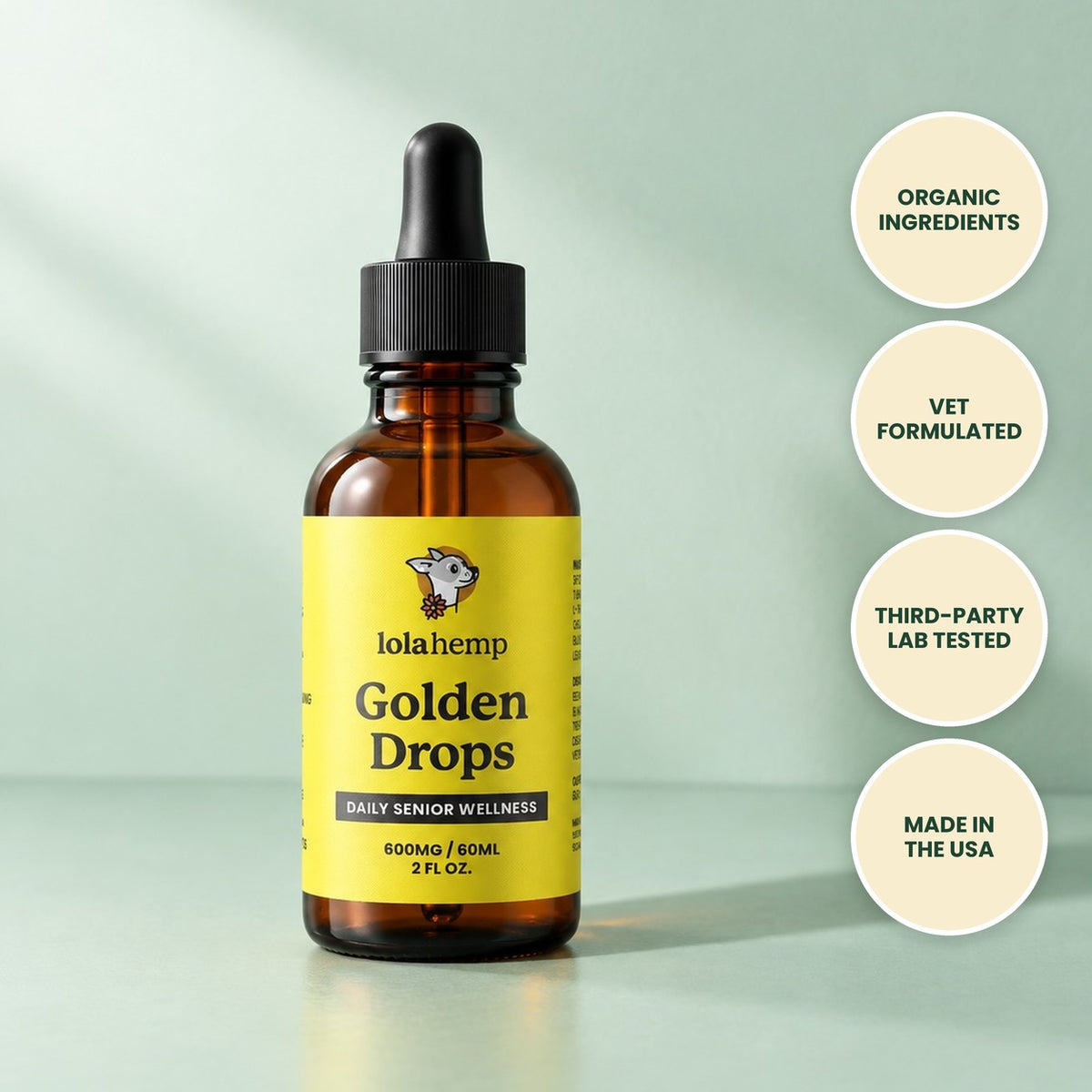
Frequently Asked Questions
Your Senior Dog Mobility Plan
My first dog, Roxy, was a Lab who lived to 15. In her older years, she started slipping on our hardwood floors. Her back legs would slide out when she tried to stand, and it kept happening more as she aged.
I chalked it up to stiff joints, like most of us do.
In eight years of building Lolahemp, I've talked with thousands of senior dog owners, along with vets and canine physical therapists. And what I've learned is that getting up isn't just about joints. It takes three things working together: muscle to push, coordination to place the feet, and grip to keep them from sliding.
If any one of the three is off, getting up gets harder, even when the joints are fine. Trouble getting up can also be a sign of a joint, spine or nerve problem, so it's always worth mentioning to your vet. The good news is all three can be supported at home, and most of this plan takes about five minutes a day.
A few things in here surprised me when I first read the research. I think they'll surprise you too.
How this plan works
Today (10 minutes): Do the 30 second muscle check. Trim the fur between the paw pads and check the nails. Put a non-slip rug where your dog gets up.
Week 1: Start the 5 minute morning routine with just the warm up and 3 sit-to-stands.
Week 2: Add the pole walk or figure eights.
Every week: Repeat the muscle check, same day, same spot, so you can see the trend.
Everything below explains why each step matters. Short on time? Jump straight to the 5 minute morning routine.
Why Getting Up Is the Hardest Thing Your Dog Does All Day
Standing still, a dog carries about 60% of its weight on the front legs and 40% on the back. The front legs hold your dog up. The back legs push your dog up.
Getting up from lying down is different from walking. The back legs have to straighten from a fully folded position and push the back half of the body up, with no momentum to help. Researchers who filmed dogs standing up found the knees and hocks bend much further than they do on a walk. It's one reason getting up is often one of the first changes owners notice.
So when you see the back end lag behind the front, think of it as the engine running low on one of three things.
The Three Things Your Dog Needs to Get Up

1. Muscle: The Loss You Can't See on the Scale
Here's the part most owners never hear. Over their senior years, healthy dogs lose roughly 10% of their lean body mass and gain about 10% more fat over the same stretch. One analysis found young dogs averaged 79% lean mass, while dogs over 7 averaged 70%.
That means your dog's weight can stay about the same while the muscle underneath quietly shrinks. The scale says everything is fine. The stairs say otherwise.
Where to check first: Most owners would guess the back legs. But veterinary guidelines from the World Small Animal Veterinary Association say muscle loss usually shows up first along the spine. Vets check four places: the spine, the shoulder blades, the hips and the head.
The 30 second muscle check:
Spine. Run your flat hand along your dog's back. You should feel firm muscle on both sides of the spine. If the bumps of the spine feel sharper than they used to, that's the first sign. Weight loss can do this too, so note your dog's weight when you check.
Hips. Rest your hand over the top of the hips. If the hip bones feel sharper or easier to find than they did a few months ago, the muscle around them may be thinning.
Thighs. Feel the back of each thigh and compare left to right, then compare them to the shoulders. Thighs that feel thinner than the shoulders are worth tracking. One side thinner than the other is worth a vet visit.
Do this once a week, same day, same spot. You're not diagnosing anything. You're learning what normal feels like so you notice a change early and can bring it to your vet.
The protein surprise: Many owners cut back protein as their dog ages, assuming older dogs need less. Veterinary nutrition research says the opposite. Healthy senior dogs typically need about 50% more protein than younger adults to hold on to muscle. Some senior foods are actually lower in protein. If your dog has kidney issues, is on a prescription diet or has any health condition, talk to your vet first, since those dogs have different needs.
What actually helps:
Sit-to-stands, done right. Canine physical therapists use sit-to-stand as a core exercise. Think of it as a squat for dogs. Stand in front of your dog on a rug or grass, not a slick floor. Hold a treat at nose level, close to their face. For the sit, move it slowly up and slightly back so the back end folds under while the front feet stay put. For the stand, move the treat straight out from the nose an inch or two, just enough that they rise without walking forward. Start with 3 to 5 slow reps, once or twice a day. Quality matters more than numbers: your dog should push straight up without stepping forward. If they can't sit square, or they lean onto one hip every time, skip this one and ask your vet.
Gentle uphill walks. Uphill makes the back legs do more of the pushing. A slight slope on your normal route is enough. Go slow, and take the downhill side just as slowly, since going down puts more load on the front legs.
Little and often. Five minutes every day does more than one long walk on the weekend. Muscle responds to steady use.

2. Coordination: Your Dog Is Balancing With Their Eyes
This one surprised me the most.
A 2025 study at the University of Veterinary Medicine Vienna measured how steady adult and senior dogs stood on a pressure plate. With their eyes open, both groups looked the same. Then researchers covered the dogs' eyes. The younger dogs actually got steadier, swaying less front to back, likely by relying on what they could feel through their legs and paws. The senior dogs didn't get that boost, so with their eyes covered they swayed more than the younger dogs.
In plain words: as dogs age, they seem to lean more on their eyes to stay balanced, likely because the sense of where their feet are fades a little.
Now think about when your dog has the hardest time getting up. First thing in the morning. After a nap. Often in a dim room. Stiffness after rest plays a part, and that little pause before they stand may also be them figuring out where their back feet are.
Watch how your dog sits. Rehab vets look for a square sit, with both back legs tucked evenly underneath. A dog who flops over onto one hip, or walks forward a few steps to get up, is shifting work away from the back end. It's worth noting and mentioning at your next vet visit.
What actually helps:
Light where they get up. A small nightlight near their bed costs a few dollars and gives their eyes something to work with at 5am. If you read our guide on nighttime restlessness, this is the same nightlight doing double duty.
Pole walks. Lay 4 to 6 broom handles flat on a rug, carpet or grass, spaced about as far apart as your dog is tall at the shoulder. That's roughly 2 feet for a Lab, closer for small dogs. Tape the ends or rest them on a towel so they can't roll. Walk your dog slowly over them on a leash. The goal is an even step over each pole, not a hop. Canine physical therapists use low poles like these to build limb awareness, because your dog has to think about where each foot lands. Start with 2 or 3 passes. If they knock a pole, reset it and go slower.
Slow figure eights. Walk your dog in a slow figure eight around two chairs. Turning makes them shift weight from side to side, which works balance in a way straight walks don't. Keep the loops wide so they never have to pivot sharply, and do them on a rug or grass.
Keep the layout the same. A familiar room is easier to move through. Avoid moving furniture around the spots where your dog gets up and turns.

3. Grip: The Fix Most Owners Have Never Heard Of
This is what I wish I'd known with Roxy.
A dog's paw pads are built to grip. But two things can get between the pads and the floor, and both are easy to miss.
The fur between the pads. Many dogs grow tufts of fur between their pads. Vets on BluePearl's hospice team call it "hobbit fur." When it grows over the pads, it works like a sock on a hardwood floor. Trimming it level with the pads, using quiet clippers or small blunt-tip scissors held flat and away from the skin, is one of the simplest, cheapest things you can do for grip. If you're nervous, your groomer or vet can do it in a few minutes.
The nails. If you can hear nails clicking on the floor, or the nails touch the ground when your dog is standing still on a hard floor, they're long. Long nails can make it harder for the paw to grip a slick floor, especially when your dog pushes to stand. Aim for a trim every 2 to 4 weeks. Older, less active dogs wear their nails down less, so they often need trims more often. If your dog dislikes trims, do one paw a day with plenty of treats.
What actually helps:
Runners where it matters. You don't need to carpet the house. Put a rug or yoga mat in the three places your dog needs grip most: where they sleep, where they eat, and wherever they turn a corner on a smooth floor. Use rugs with non-slip backing, or put a rug pad underneath, so the rug itself doesn't slide.
A path, not islands. A line of runners connecting their bed, water and the door gives them a route they trust.
Grip aids for slick homes. Paw pad grips and nail grips exist for dogs who still slide after trims and rugs. Ask your vet which fits your dog.

Your 5 Minute Morning Routine
Screenshot this. It puts all three together.
Before they get up (10 seconds): Turn on a light where they sleep. Make sure the runner by their bed is flat.
Warm up (1 minute): A slow lap around the room or the yard. Let them stretch.
Muscle (1 minute): 3 to 5 slow sit-to-stands with a treat.
Coordination (2 minutes): 2 or 3 slow passes over the poles, or one slow figure eight around two chairs.
Walk (as long as they enjoy): Include a gentle slope if you have one.
Once a week: The 30 second muscle check. Look at nails and paw fur.
Every 2 to 4 weeks: Trim nails and the fur between the pads.
Check with your vet before starting, especially if your dog has a long back (like a Dachshund or Corgi), a history of back or neck trouble, or a recent injury or surgery.
Go at your dog's pace. Stop for the day if your dog starts panting hard, lagging, trembling, scuffing their nails or refusing. End before their form gets sloppy.
The Part Exercise Can't Reach on Its Own
Here's what ties all of this together. Muscle stays when it gets used. Coordination stays sharp when it gets practiced. And a dog only does either when they feel like moving.
A senior dog who isn't comfortable overall will conserve energy. They skip the extra lap. They lie back down. They opt out. Over weeks, that quietly costs the very muscle and balance this plan is trying to protect.
That's why getting up isn't just a joint question. It's a whole dog question: comfort, rest, calm and the energy to keep moving every day.
Daily Support for the Whole Senior Dog
Lolahemp Golden Drops are vet formulated for senior dogs, made to support the whole dog so the daily movement in this plan feels easier to say yes to. Five ingredients. Every one does a job.
Full-spectrum hemp supports comfort and a calm, balanced disposition. Dogs have a built-in system, the endocannabinoid system, that helps keep comfort, mood and rest in balance. Hemp supports that system.
Turmeric supports a healthy inflammatory response, part of everyday comfort and mobility as dogs age.
L-theanine supports normal relaxation and a calm mood.
MCT oil supports normal brain function as dogs age.
Black pepper fruit helps the body absorb turmeric.
No fillers, no flavorings, nothing to pad the label. Our hemp is organic full-spectrum hemp from a single family U.S. farm, and every batch is third-party lab tested. Golden Drops are designed for daily use, given twice a day and dosed by weight.
Trusted by 250,000+ dog owners. Golden Drops are not intended to diagnose, treat, cure or prevent any disease.
Frequently Asked Questions
Is my dog too old to build muscle? Senior dogs are not too old for exercise. Veterinary rehab teams say older dogs are often the ones who benefit most. Start small, go slow and stay consistent. For many senior dogs the goal is holding on to the muscle they have, and that counts as a win.
How long before I notice a difference from the exercises? Every dog is different. Muscle and balance respond to steady, daily use over time, so think in months, not days. Keep doing the weekly muscle check so you can see the trend.
My dog only slips on certain floors. Is that normal? Yes. Hardwood, tile and laminate are the hardest surfaces to grip. Start with the paw fur and nails, then add runners on those floors first.
Should I switch my senior dog's food? Not without talking to your vet. Ask whether your dog's current food has enough protein for a senior dog, and bring up your muscle check findings. If your dog is on a prescription or kidney diet, follow your vet's guidance.
When should I talk to my vet? Any sudden change in how your dog gets up or walks, favoring one leg, scuffing or dragging the tops of the back feet, a wobbly or drunken walk, back legs crossing or giving out, crying out when getting up or being touched, accidents in the house, or muscle loss on one side only, or all over along with weight loss. Those are worth a visit rather than a home plan.
Sources
World Small Animal Veterinary Association, Muscle Condition Score chart (developed at Tufts Cummings School of Veterinary Medicine).
Laflamme, D.P. (2008). Pet food safety: dietary protein. Topics in Companion Animal Medicine 23(3):154 to 157.
Nutrition requirements of senior pets, Improve International.
Senior pet nutrition Q&A, dvm360 (Hayek and Davenport lean mass data).
Impact of Aging and Visual Input on Postural Stability in Dogs (2025), Sensors, University of Veterinary Medicine Vienna.
Weight distribution between fore and hind legs in dogs, Society for Integrative and Comparative Biology.
Yoshikawa, K. et al. Kinematic characteristics of canine hindlimb movement during sit-to-stand and stand-to-sit motions.
Rehabilitation therapy for dogs at home, Michigan State University College of Veterinary Medicine.
Keeping senior dogs strong, stable, and engaged, dvm360.
Easy tips to prevent pet slips, BluePearl Pet Hospice.
Canine cavaletti at home, American Kennel Club.
Strength exercises for dogs, Oakland Veterinary Referral Services.
This article is for educational purposes only and is not intended to diagnose, treat, cure, or prevent any disease or condition in animals. Consult your veterinarian before making changes to your dog's care, exercise or supplement routine.

Lolahemp Golden Drops
Made in small batches on a single family U.S. farm.
Try Lolahemp risk-free